Repurposing Containers for Construction & Modular Buildings
Shipping containers have evolved far beyond their original role in transporting goods. Today, these steel boxes are a cornerstone of innovative construction and modular architecture. From compact homes and office spaces to pop-up shops and emergency shelters, repurposed containers provide durable, cost-effective, and flexible building solutions. In this post, we explore the applications, advantages, and design considerations for using shipping containers in construction projects.
Why Containers Are an Ideal Choice for Construction
1. Cost-Effective
Repurposing containers is significantly more affordable than building with traditional materials. A used container costs a fraction of conventional building materials, saving money on walls, framing, and roofing.
2. Durability and Strength
Shipping containers are made from corten steel, designed to withstand harsh weather and heavy loads. This makes them structurally resilient for long-term use in construction.
3. Modularity
Containers are inherently modular. They can be stacked vertically, arranged side-by-side, or connected in multiple configurations to create multi-story buildings or large open spaces. This modularity enables scalable and customizable designs.
4. Speed of Construction
Compared to traditional construction, container-based buildings are faster to assemble. Units can be delivered pre-fabricated, reducing on-site labor and project timelines.
Popular Applications for Container Construction
1. Modular Homes
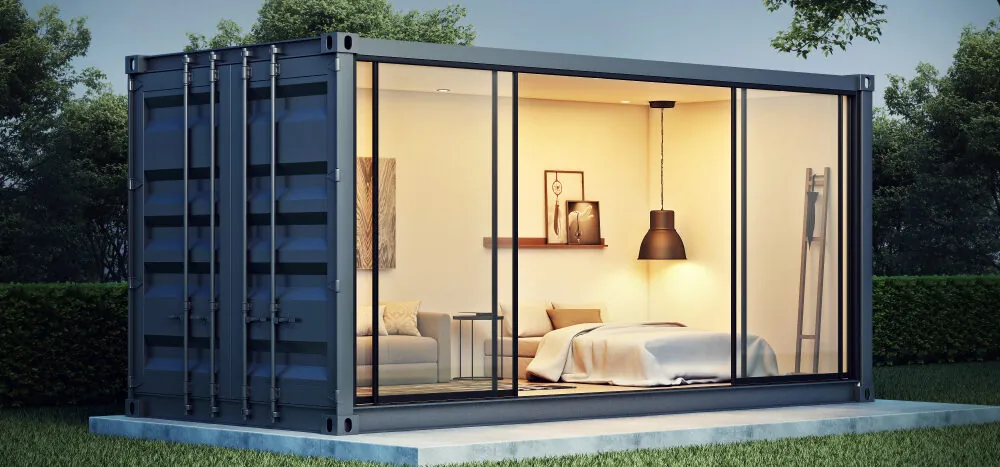
Containers can be transformed into stylish, functional homes. Architects often combine several containers to create spacious, modern interiors with open-plan designs, loft-style layouts, or multi-story arrangements.
2. Office Spaces
Temporary or permanent office spaces can be built using containers, particularly for construction sites, remote locations, or pop-up corporate offices. These offices are easy to relocate and adapt to changing needs.
3. Retail & Hospitality Spaces
Pop-up shops, cafes, and bars benefit from container construction due to quick setup, portability, and a modern, industrial aesthetic. Side walls can be opened entirely to create open-air experiences.
4. Community & Emergency Structures
Schools, clinics, and emergency shelters can be rapidly deployed using container units. During disasters, these buildings can provide immediate solutions with minimal infrastructure requirements.
Design & Conversion Considerations
- Insulation and Ventilation: Steel containers conduct heat and cold, so insulation and proper airflow are essential for comfort. Spray foam, panel insulation, and roof ventilation systems are commonly used.
- Structural Modifications: When cutting doors, windows, or combining units, reinforce corners and edges to maintain structural integrity.
- Plumbing and Electrical: Hire certified professionals to install water, waste, and electrical systems safely.
- Permits and Regulations: Check local building codes for zoning, fire safety, and occupancy requirements.
Benefits of Using Shipping Containers in Construction
- Eco-Friendly: Reusing containers reduces the need for new construction materials.
- Mobility: Modular units can be relocated or expanded as needed.
- Versatility: Containers can be customized for luxury homes, commercial buildings, or emergency infrastructure.
- Durability: Resistant to harsh weather and vandalism compared to traditional temporary structures.
Conclusion
Repurposed shipping containers are transforming the construction landscape. They offer an innovative, sustainable, and cost-effective alternative to traditional building methods. Whether you are building a modern home, office, or community space, containers provide unmatched flexibility and durability.